Megenth Horde
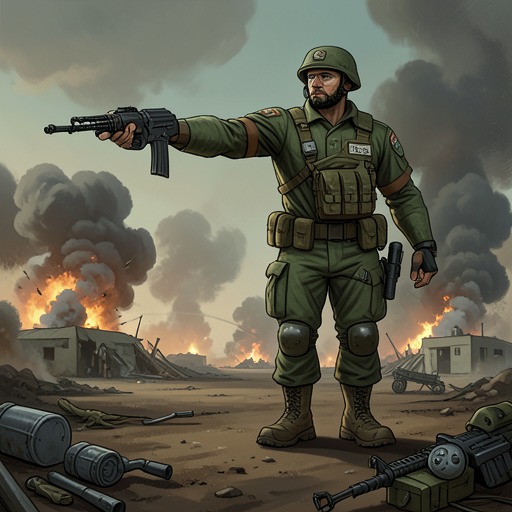
The Robot Who Looked Like MeThe Megenth Horde is a reptilian military power whose expansion culminates in the destruction of the Jenghik Palace and the collapse of Earth’s authority at the furthest extent of its suzerainty. The accounts portray its advance as both an immediate battlefield threat and part of a larger reversal in the balance of power between Megenth and Earth.
Identity and Expansion
The Horde’s forces had long been quiescent before they began to expand suddenly. One account attributes this change to a serum given to them by Charles Engstrom, a telepath described as power-crazed. The evidence establishes the serum as the trigger for the expansion, though it does not explain how the Horde was organized or how its campaigns were directed.
That renewed advance forms the background to Jon Westerley’s recall from a secret mission to Angos II. Westerley materialized within a ring of Black Force after his companion Ocpetis Mam was trapped in the Hall of Floating Mirrors and his mind taken over by Santhis, the renegade leader of the Entropy Guild. The account presents this as a disaster for Westerley and a turning point in the wider crisis; it does not identify the Horde as responsible for the deception or the trap.
The Advance and Resistance
In one encounter, the Horde approaches across a green-and-purple moss sward while Westerley and Ocpetis Mam draw their swords and take a stand together. The warriors carry raftii, long, curved, double-pointed dirks said to have spread terror through the civilized galaxy. Westerley and Ocpetis face the advancing force back to back, speaking with grim resolve about the deaths their stand may bring, even as they recognize that their situation is hopeless.
The clash shows the Horde as a force able to press forward against individual resistance. Westerley parries the first attack and prepares to face another opponent; soon more than one attacker is coming at him while Ocpetis fights beside him. The episode offers no account of their eventual fate, but its sense of encirclement makes the local encounter a stark measure of the wider imbalance.
The Fall of the Jenghik Palace
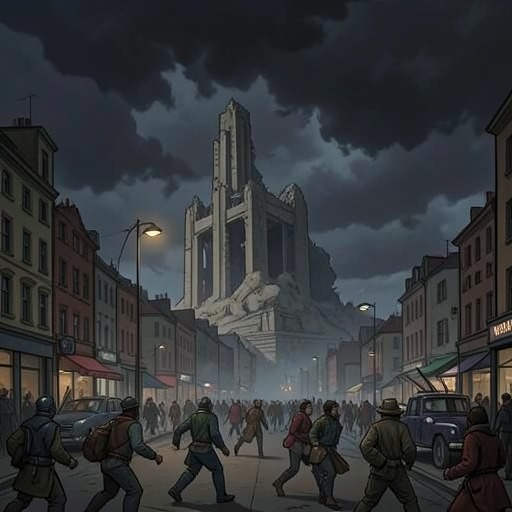
A robot whose true identity remains uncertain—possibly Dr. Zach—testifies to the Horde’s assault on the Jenghik Palace. Its warriors swarm over the crimson balustrades, overturn ceremonial bronze cauldrons, and destroy the palace. The governor dies defending it, while the Terran Guard makes its final stand in Dolorus Keep and is wiped out. The ladies of the court defend themselves with small daggers before being granted quick passage.
The testimony ends with the great fire consuming Earth’s silver eagles and the palace collapsing into dust. As the furthest extent of Earth’s suzerainty, the building’s fall signifies more than the loss of a seat of power: it marks the destruction of the visible reach of Earth’s rule. The witness concludes that Terra faces annihilation, framing the Horde’s victory as part of an existential defeat rather than a single captured stronghold.
Narrative Significance
The Horde’s role emerges through sharply different scales of testimony: two companions waiting for an attack they cannot withstand, and a witness recounting the destruction of an imperial palace. Together, these scenes trace the distance between personal resistance and political collapse. The Horde’s sudden expansion turns an isolated stand into part of a larger catastrophe, while the uncertain identity of the robot witness leaves the palace’s fall recorded by a narrator whose own status—as crafted rather than born—complicates the meaning of loyalty to Earth.